Beginner pencils
Soft graphite pencils help preschool writers control pressure while tracing a name.
Browse pencilsFree printable name tracing
Create a free custom name tracing worksheet for any name. Choose a style, letter size, and trace lines, then download a PDF or PNG in your browser—no signup.
At a glance
The form above builds one page from the name you type. Change a single setting and export again—nothing is uploaded. The name tracing guide walks through the same flow for home and classroom use.
When joins are ready, move the same name to cursive practice sheets. For decorative hands, open calligraphy letters.
Search for name tracing worksheets and you will find endless generic packets—yet your preschooler is not named “Sample.” Name tracing only works when the letters match the exact name a child is learning to recognize and write. Emma, Liam, Sophia, and Santiago each need different letter counts, joins, and spacing. A printable name tracing worksheet maker solves that gap: you type the name once, choose handwriting or cursive, set Letter paper for US printers, and export a PDF with multiple trace lines. InkPractice keeps everything in the browser—no signup, no upload—so teachers can prepare a class set of name tracing worksheets during planning period and parents can print tonight’s drill before bedtime.
Static “boy names” or “girl names” packs also miss hyphenated names, middle names, classroom nicknames, and corrected spellings after a family change. When the letters on the page do not match the cubby label, practice turns into confusion. Custom name tracing worksheets keep the spelling honest and let you reprint the same week a nickname enters the routine. That flexibility is why a browser generator outperforms a one-time PDF download for daily name work.
Use trace mode first so the child follows the dotted letters, then switch to solid mode for independent writing. Enlarge the font for early writers, add more lines for older kids, and reprint whenever a nickname or middle name enters the routine. Pair name tracing with cursive practice sheets once joins are ready, or open calligraphy letters when you want decorative styles for place cards and gifts.
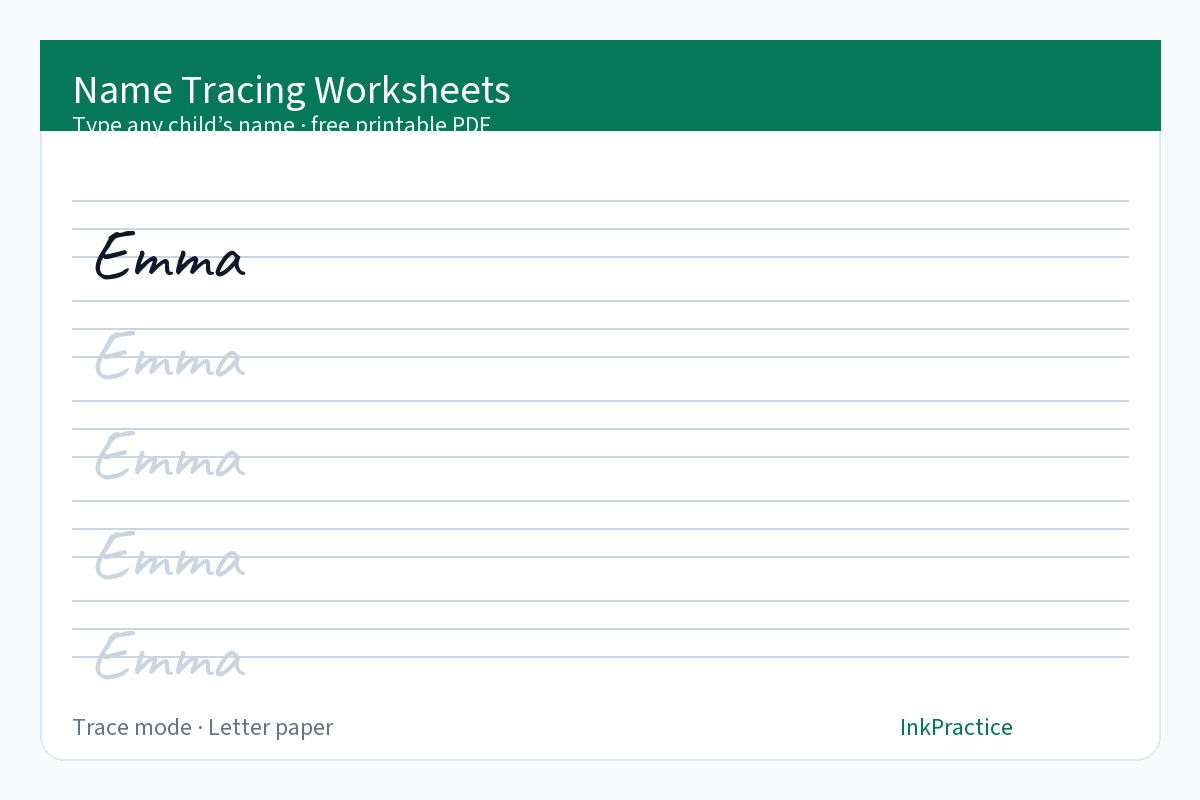
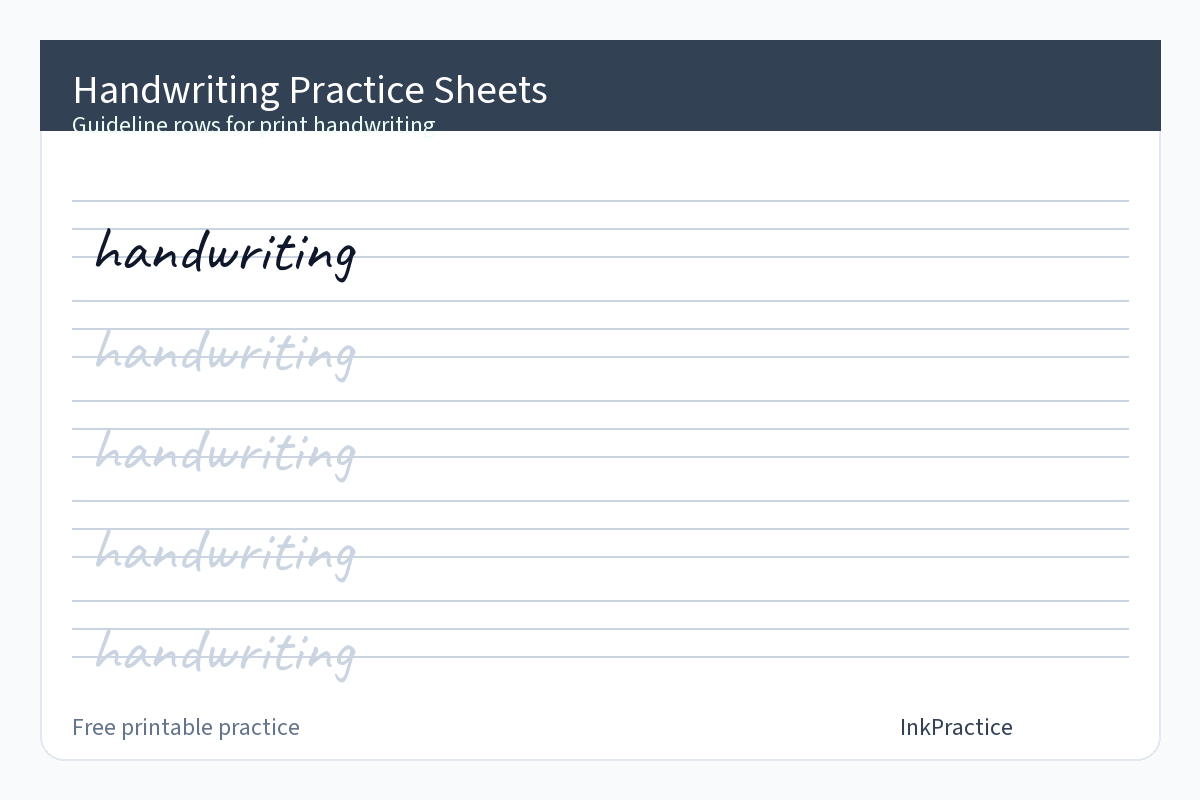
Preschool name tracing usually needs Large letters, taller line height, and fewer practice rows so each stroke has room. Kindergarten writers can move toward Medium size, more rows, and a solid follow-up page once the print spelling is stable. If letters crowd, raise line height before you shrink the font. After the name feels automatic in print, graduate the same spelling to cursive practice sheets.
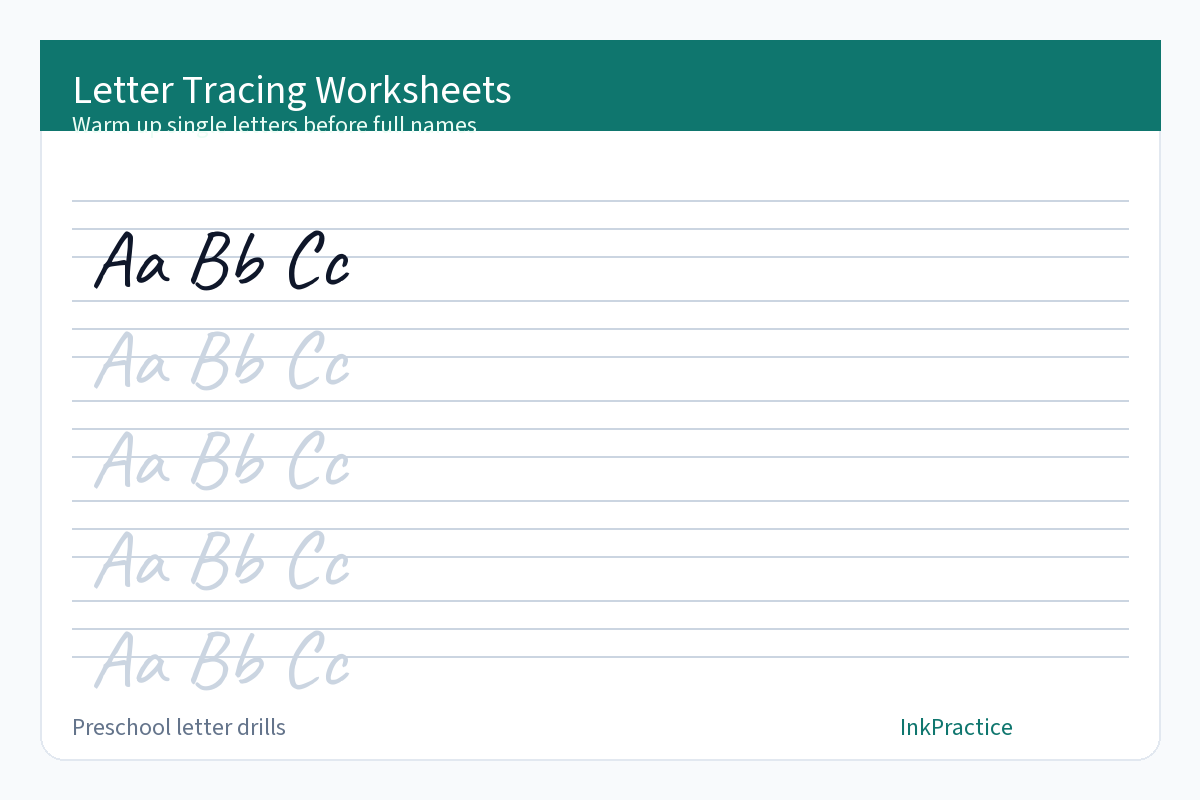
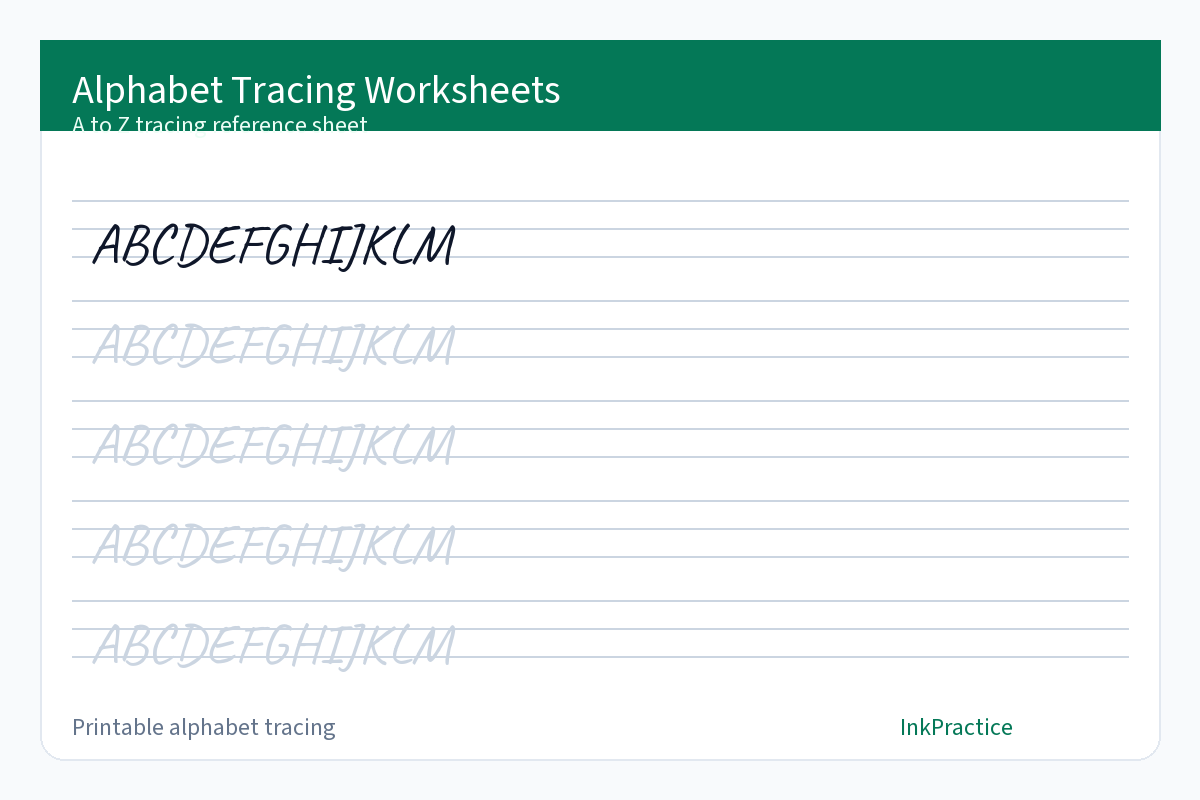
Start with the first name only. Keep sessions short—five focused minutes of name tracing beats a long frustrated worksheet. Sit beside the child, model the first stroke, then let them finish the line. If letters collide, raise line height and reduce lines per page so each row feels spacious. For letter tracing worksheets that warm up single forms before the full name, type just “A a” or “Mm” and print a separate sheet. Alphabet tracing worksheets work the same way: generate A–Z once as a reference, then return to personalized name tracing worksheets for daily practice. US Letter paper is the default here so home printers match school handouts without cropping.
A practical home routine looks like this: print one trace-mode sheet on Monday, review starting points together, then print a solid-mode follow-up midweek. Keep the PDF on your phone so you can reprint after a messy dinner-table session without hunting for a new packet. If the child rushes, cut the page into fewer rows with scissors or regenerate with more blank lines so each attempt feels calmer. Consistency matters more than volume—three clean name lines teach more than a crowded page of half-finished letters. When attention dips, stop early and return tomorrow with the same spelling so the motor pattern stays familiar.
Type the exact name, pick Handwriting, Cursive, Modern, or Script, then set letter size, capitalization, trace or solid letters, paper size, and the number of practice and blank rows.
Download a PDF to print or a PNG for a slide. The sheet is generated in your browser, so you can change one setting and export again without an account.
Yes. Creating and downloading name tracing worksheets is free. There is no signup and the name is not uploaded.
Print as many names as you need for home practice or a class roster. Optional supply links on this page do not gate the download.
Styles are Handwriting, Cursive, Modern, and Script. Letter size is Small, Medium, or Large, with a fine-tune range of 24–96 pt and line height 1.0–2.5.
You can print 1–8 practice rows and 0–3 blank rows on US Letter or A4. Trace mode can use a dotted outline, a solid example row, and a stroke-start arrow. Characters outside basic ASCII use a fallback sans font so the line does not go blank.
Start in trace mode so the child follows a dotted outline, then switch to solid mode to check independent writing.
Many teachers print both: one guided name tracing worksheet and one follow-up with blank rows. A solid example row at the top gives a model without replacing the practice lines.
Yes. Create free printable name tracing worksheets for preschool by typing the child’s name, choosing Large letters, and downloading a PDF—no signup.
Keep sessions short and start with the first name only. Styles available here are Handwriting, Cursive, Modern, and Script.
Yes. Every sheet includes dashed ascender and midline guides plus a solid baseline on each practice row.
Set 1–8 practice rows and 0–3 blank rows on US Letter or A4 so the handwriting lines match your printer.
Open the generator once, set paper size and letter size, then change only the name field and download a PDF for each student.
That keeps layout consistent across the class set. Reprint only the names that need another week instead of photocopying a generic packet.
For a classroom roster, open the generator once, type the first student’s name, download the PDF, then replace only the name field for the next child. That workflow keeps paper size, font size, and line count identical across the set so stacks of name tracing worksheets feel consistent at the writing table. Specialists can prepare larger letters for emerging writers and denser rows for students who already recognize their print name. When a substitute teacher covers the literacy station, leave a short note: trace mode first, solid mode second, five minutes maximum.
Homework packets work the same way. Send one personalized page home on Monday and ask families to return it Friday with a quick note about which letters felt hardest. Because InkPractice regenerates instantly, you can reprint only the names that need another week instead of photocopying an entire generic packet. Parents who travel between households can keep the PDF on a phone and print at either house without hunting for the original packet. That reliability is what makes free name tracing worksheets practical for real schedules—not just for a one-time craft afternoon.
If you also teach letter formation before full names, generate a second warm-up page with two or three target letters, then return to the full name sheet so children connect isolated forms to the word on their cubby. Pair those drills with cursive practice sheets only after the print spelling is stable, so joins do not overwrite a fragile name pattern.
Celebrate correct starting points more than perfect beauty. Name tracing builds letter identity and motor planning; neatness follows consistency. Laminate one solid-mode sheet for dry-erase reuse, and keep PDF originals for reprints when ink fades. Rotate between handwriting and cursive styles only after the print name is stable. When classmates share similar names, generate separate name tracing worksheets so no one copies the wrong spelling. Classroom stations can mix name tracing, letter tracing worksheets, and calligraphy practice sheets for older students who want flourish after fundamentals. Those decorative pages are the calligraphy worksheets to print once everyday letters feel steady.
Teachers preparing a full roster can change only the name field and export one PDF per student in a few minutes. Parents supporting bilingual households can print the preferred school spelling first, then add a second sheet for a preferred family nickname once the primary form is secure. Occupational therapists and tutors often prefer larger letters and wider line height; both controls sit next to the preview so adjustments stay visible before you download. If a student mirrors letters, slow the pace and ask them to say each letter aloud before tracing so sound and shape stay linked.
Looking for more practice paths? Browse the InkPractice directory for handwriting, cursive, and calligraphy worksheet makers that share this same free engine.
Name tracing works best with simple writing tools—not calligraphy pens. The links below are optional affiliate suggestions for pencils, grips, and reusable pockets.
Soft graphite pencils help preschool writers control pressure while tracing a name.
Browse pencilsA simple grip can steady small hands during short name tracing sessions.
Browse pencil gripsSlide a printed name tracing sheet into a reusable pocket for wipe-and-repeat practice.
Browse dry-erase pockets