
Smooth writing pens
A comfortable gel or rollerball pen keeps cursive joins readable on printed guideline sheets.
Browse writing pensFree printable cursive worksheets
Generate free cursive practice sheets with custom words, names, or sentences. Download printable cursive writing practice sheets in your browser—trace mode, solid ink, Letter or A4 paper, no signup.
At a glance
Cursive practice sheets work best when the lines show the exact letters a student needs—not a random pangram from a packet printed in 2012. InkPractice lets you build cursive writing practice sheets for spelling lists, signature drills, or classroom warm-ups. Choose the cursive style, keep Letter paper for US classrooms, set multiple repeated lines, and export a PDF. Parents searching for cursive handwriting practice sheets can type a child’s full name; teachers can paste a weekly vocabulary string and print a class set before the bell. Because generation happens on-device, you can iterate font size and line height until joins feel readable at desk distance.
Start in trace mode so learners follow light gray cursive forms, then switch to solid mode to evaluate slant and spacing. When you need personalized names first, open our custom name tracing worksheets tool. For decorative hands beyond school cursive, visit calligraphy letters and compare how the same phrase looks in modern or script styles.
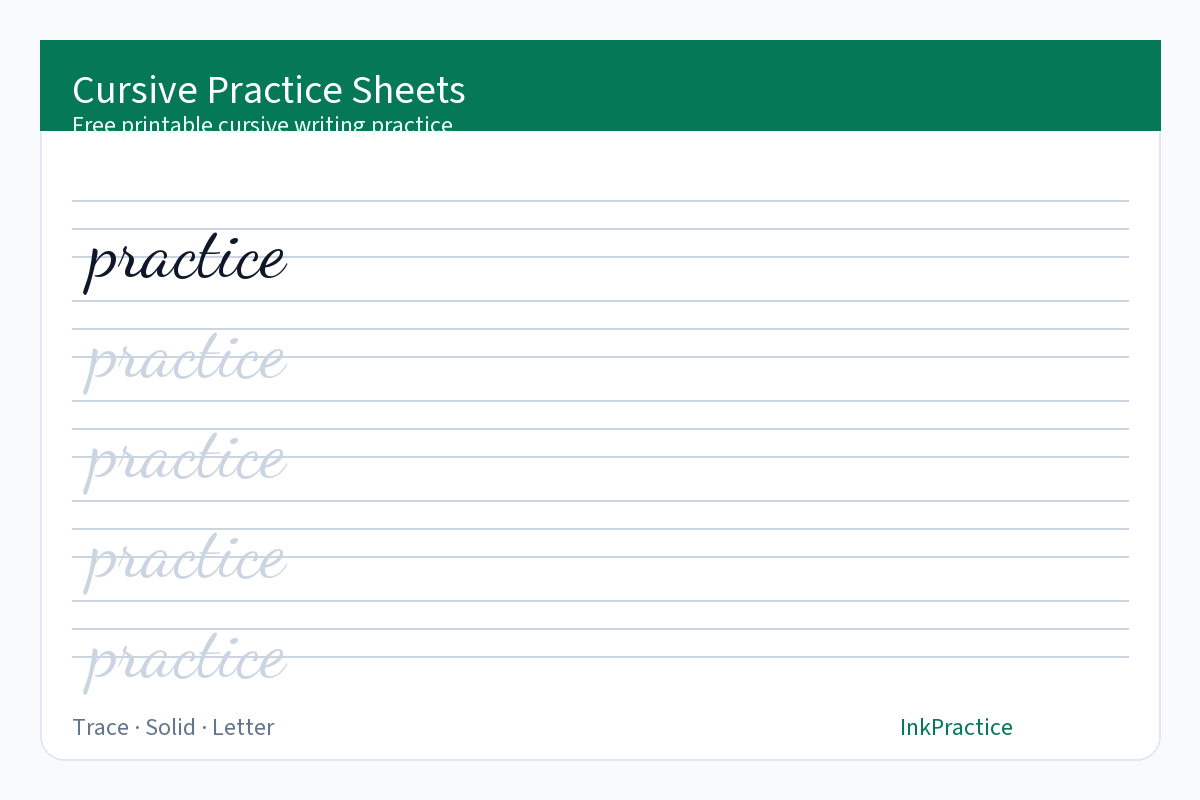
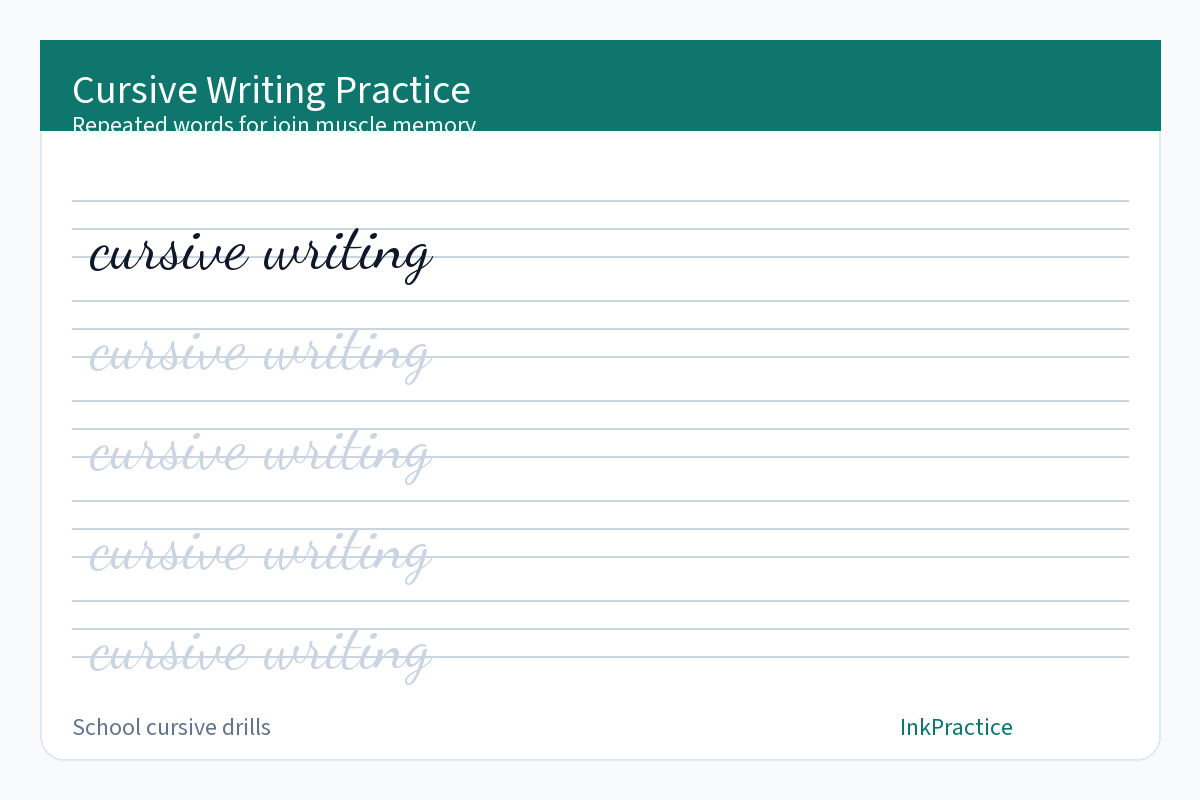
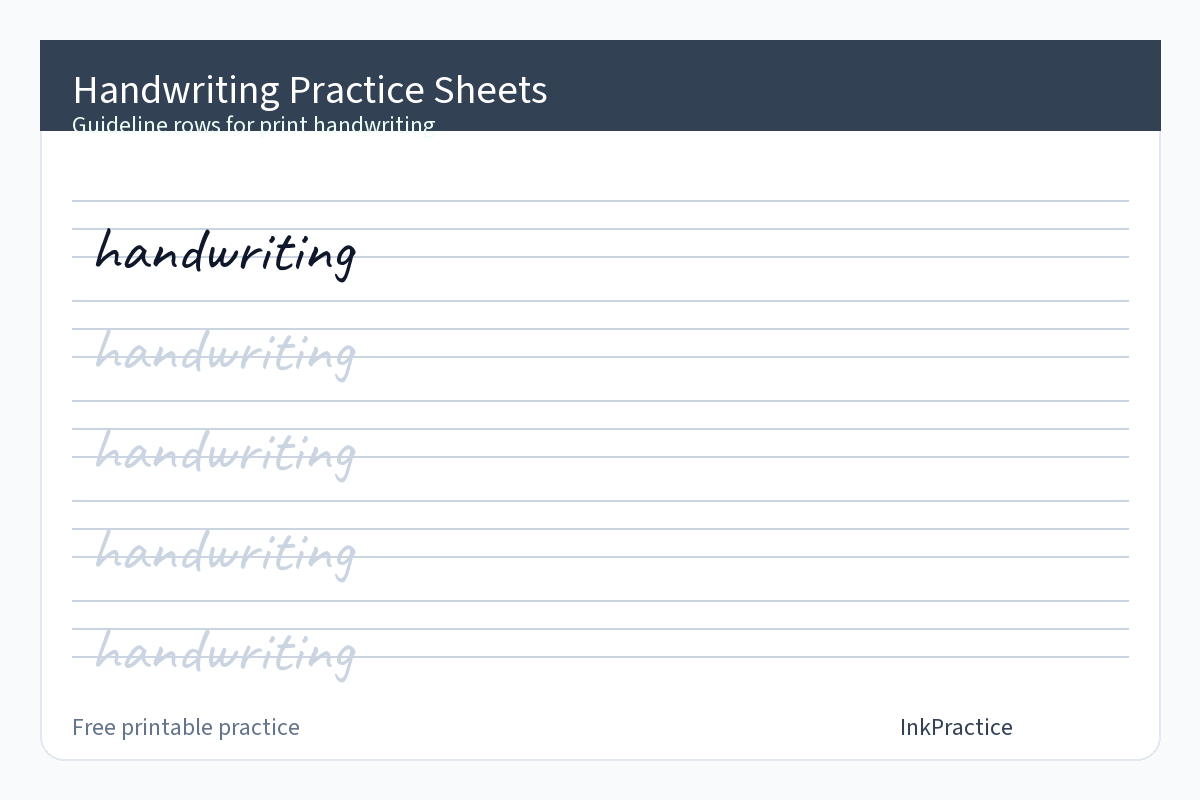
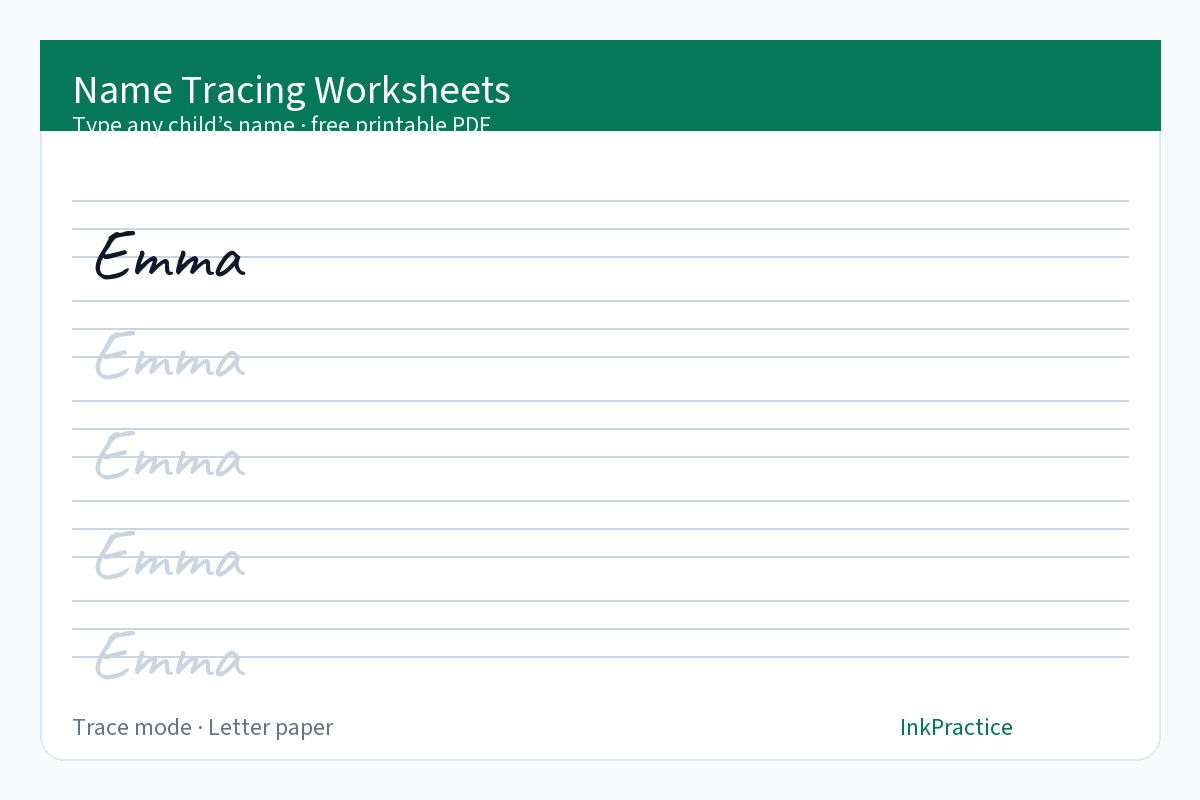
Warm up with ovals and undercurves on blank lines, then move to letters that share entry strokes. Print cursive practice sheets with three to four lines of the same word so muscle memory builds without rushing a full paragraph. Keep the paper angled to your writing hand, relax the grip, and watch spacing between words more than ornamental loops. Handwriting practice sheets from InkPractice share the same guidelines engine—switch styles if a learner needs a simpler handwriting look before returning to cursive joins. Short daily sessions beat marathon copying: ten careful lines of cursive writing practice sheets outperform an hour of sloppy pages.
Some people search for a cursive generator worksheet when they want a printable page they can fill in by hand. That is what this tool builds: custom trace-and-solid practice lines for the words you type. It is not a copy-and-paste cursive text generator that turns typed letters into fancy Unicode for social media. You choose Handwriting, Cursive, Modern, or Script, set Letter or A4 paper, and download a PDF or PNG—no signup. If you only need a child’s name on guidelines first, start with name tracing worksheets, then return here for full spelling lists and join drills.
Paste this week’s spelling list, a short sentence, or a signature drill into the field above. Teachers can keep paper size, font size, and row count fixed, then swap only the practice text so every student gets the same layout. Parents can reprint one PDF after dinner without hunting for a packet. For step-by-step settings, see the cursive practice guide. When you want decorative thick–thin contrast instead of school joins, compare the same phrase on calligraphy practice sheets or the calligraphy letters generator.
For a cursive alphabet practice sheet, type a letter pair such as “Aa” or a short run like “a b c d e” and set several repeated rows. Isolate letters that share entry strokes before you ask for full words. Warm up with ovals on blank lines, then move to joins. Keep the paper angled to your writing hand, relax the grip, and watch spacing between words more than ornamental loops. Short daily sessions beat marathon copying: ten careful lines of cursive writing practice sheets outperform an hour of sloppy pages. Switch to Handwriting style if a learner needs simpler print forms before returning to cursive joins.
Adults relearning cursive can use the same sheets without a classroom packet. Type your own name, a work phrase, or a short journal line; enlarge the letters if your hand feels rusty, then tighten size once slant stays steady. Trace mode rebuilds the path; solid mode shows whether spacing held under normal pressure. Ten focused minutes a few times a week is enough for a handwriting refresh.
Clear guidelines, readable joins, and words the learner actually needs—plus enough repeated lines to build muscle memory without crowding the page.
Use the generator to set font size and line height for your student’s age. Trace mode teaches the path; solid mode reveals pressure and spacing habits.
Yes. InkPractice generates printable cursive practice sheets in your browser at no cost and without creating an account.
Download PDF for crisp classroom copies or PNG for slides. Affiliate supply links are optional and do not gate the download.
School cursive prioritizes fluent joins for everyday writing; calligraphy letters emphasize deliberate thick–thin contrast and decorative rhythm.
Stay on this page for cursive handwriting practice sheets. Switch to the calligraphy letters tool when you want modern or gothic forms for art projects.
Yes—change the style to Handwriting in the tool, or start from name tracing worksheets for print-letter name drills.
Many teachers sequence print name tracing, then cursive practice sheets, then optional calligraphy once fundamentals stick.
No. This page makes printable cursive practice worksheets with trace or solid letters—not fancy Unicode text for copying into chats or social posts.
Type custom words, download a PDF or PNG on Letter or A4, and write by hand. Styles here are Handwriting, Cursive, Modern, and Script.
Yes. Enter any letters, spelling list, name, or short sentence (up to 200 characters), set rows and paper size, then download.
Keep layout settings fixed and swap only the text when you prepare a class set. No signup is required.
Yes. Adults use the same free generator for handwriting refresh—type your own phrases, enlarge letters if needed, and practice in short sessions.
Trace mode rebuilds joins; solid mode checks slant and spacing under normal pressure.
Yes. Type letter pairs such as “Aa” or a short A–Z run, set multiple repeated rows, and export a PDF or PNG.
Drill shared entry strokes first, then move to full words. Pair alphabet drills with name tracing when a child still needs print-letter identity.
Post one model line at the top of the board and hand out matching cursive practice sheets so everyone works from the same exemplar. Rotate leaders who generate next week’s PDF so students see that worksheets are tools, not mysteries. At home, keep a folder of dated sheets to show progress in slant and letter height. If joins collapse, shrink the phrase to two letters, raise line height, and rebuild. Pair cursive drills with calligraphy worksheets only after basic joins feel automatic—calligraphy adds contrast rules that can confuse early cursive learners.
Explore the full InkPractice worksheet maker for more printable paths across handwriting, name tracing, and calligraphy.
A comfortable gel or rollerball pen keeps cursive joins readable on printed guideline sheets.
Browse writing pensRule sizes that match your printed sheet help students transfer joins from screen to notebook.
Browse practice paperGrips reduce fatigue during repeated cursive drills without changing the worksheet itself.
Browse pencil grips